
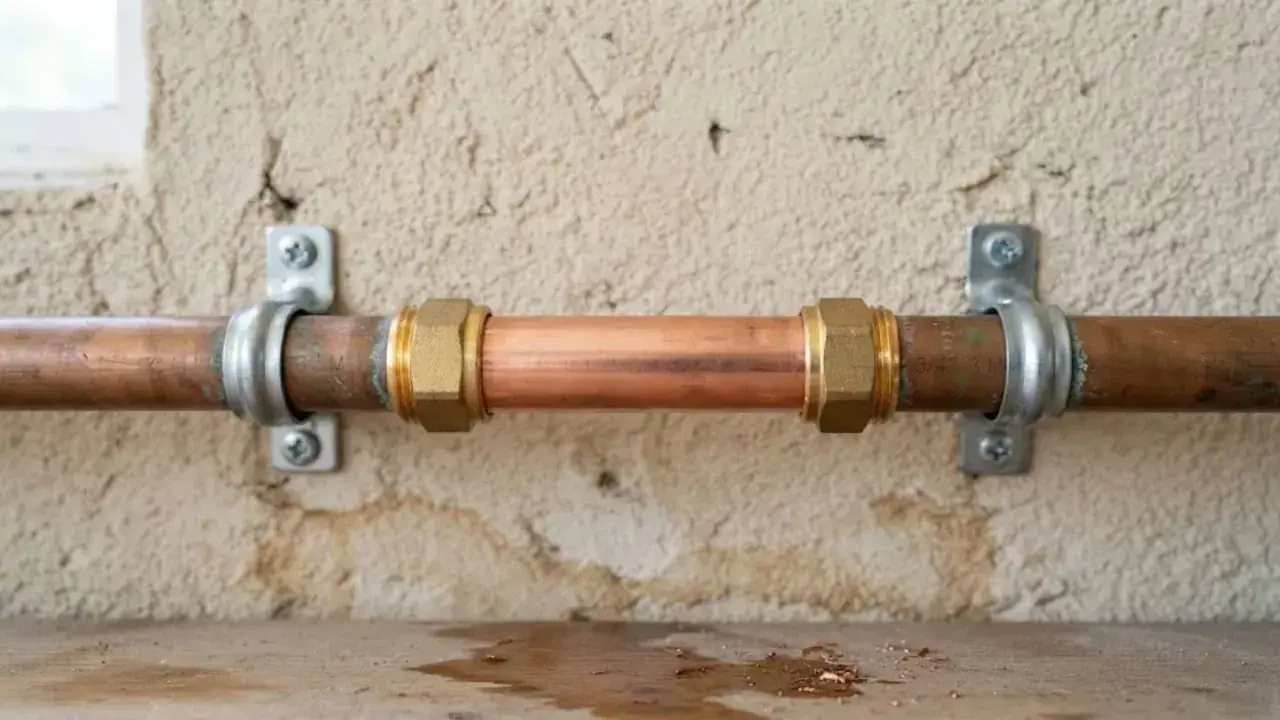
Burst pipe: what to do in the next five minutes
Water damage grows by the minute. Do these steps first, then call us.
- Shut off the main water valve to the house.
- Switch off the breaker to wet areas if you can reach it safely.
- Open a faucet at the lowest point to drain the line.
- Move belongings and rugs away from the water.
- Take photos for your insurer and call us.
If water is near the electrical panel, stay away and call us from a safe spot.
How a pipe bursts in Southern California
Pressure spikes, corrosion, old fittings and shifting soil cause many bursts. A hot water line can fail from heat and age, and a galvanized pipe can split when the wall is thin.
We find the failed section, cut out the damaged pipe and rebuild with proper fittings. If the pipe is old, we may suggest replacing more than the failed spot.
Pipe material and how it fails
| Material | Typical failure | Repair approach |
|---|---|---|
| Copper | Pinholes or a split at a joint | Cut out and sweat or press-fit new section. |
| Galvanized steel | Corrosion and thin walls | Replace the run, see repiping. |
| PEX | Damaged fitting or abrasion | New fitting or section. |
| PVC or CPVC | Crack at a stress point | Replace the cracked section. |
Water still running?
Call and we will guide you by phone.
Pressure and the meter
High water pressure speeds wear on pipes and fittings. A pressure regulator near the meter keeps pressure in a safe range. We check pressure after a burst because it may be part of the cause.
If you suspect a leak in the service line outside, see water line repair. If the burst caused flooding, call your insurer promptly.
Insurance basics after a burst pipe
Many policies cover sudden bursts and resulting damage. Ask your insurer what applies before you start repairs, and keep receipts.
We document the failed section and the repair. We do not decide what your policy covers.
After the repair: dry it out
Water left in walls and flooring grows mold. Fans and dehumidifiers help in small cases. For larger floods, a drying contractor uses meters to confirm that materials are dry.
Ask your insurer which drying service they prefer. Keep damaged items for the adjuster until they say otherwise.
Preventing the next burst
Know where your shutoffs are and test them. Replace braided supply lines to appliances every few years. Check water pressure, since pressure over about 80 psi stresses pipe and fittings.
Old galvanized lines and brittle plastic parts are the repeat offenders. A pipe that has burst once is a candidate for a closer look.
Where burst pipes hide in a house
Bursts show up at water heater connections, under sinks, in attics where supply lines run to upstairs bathrooms and in walls behind washing machines. Appliance supply hoses are a frequent culprit because they carry full line pressure all day.
If you find a wet spot with no visible source, shut the main valve and call. Checking the meter after the valve closes tells you whether the water is still moving anywhere.
Code and permits
Replacement pipe and fittings must meet the California Plumbing Code, which follows the Uniform Plumbing Code (UPC). Emergency repairs are still done to code, then documented for your records.
What shapes burst pipe repair pricing
A single section is quick. Access and pipe type change the plan. We quote before work starts.
Burst pipe questions
Often at the front of the house near the hose bib, at the water heater or at the meter. Find it before you need it.
We repair the plumbing. Drying and restoration are separate work, and your insurer can guide you.
If the pipe is old and thin, yes. We recommend it only when the evidence supports it.