
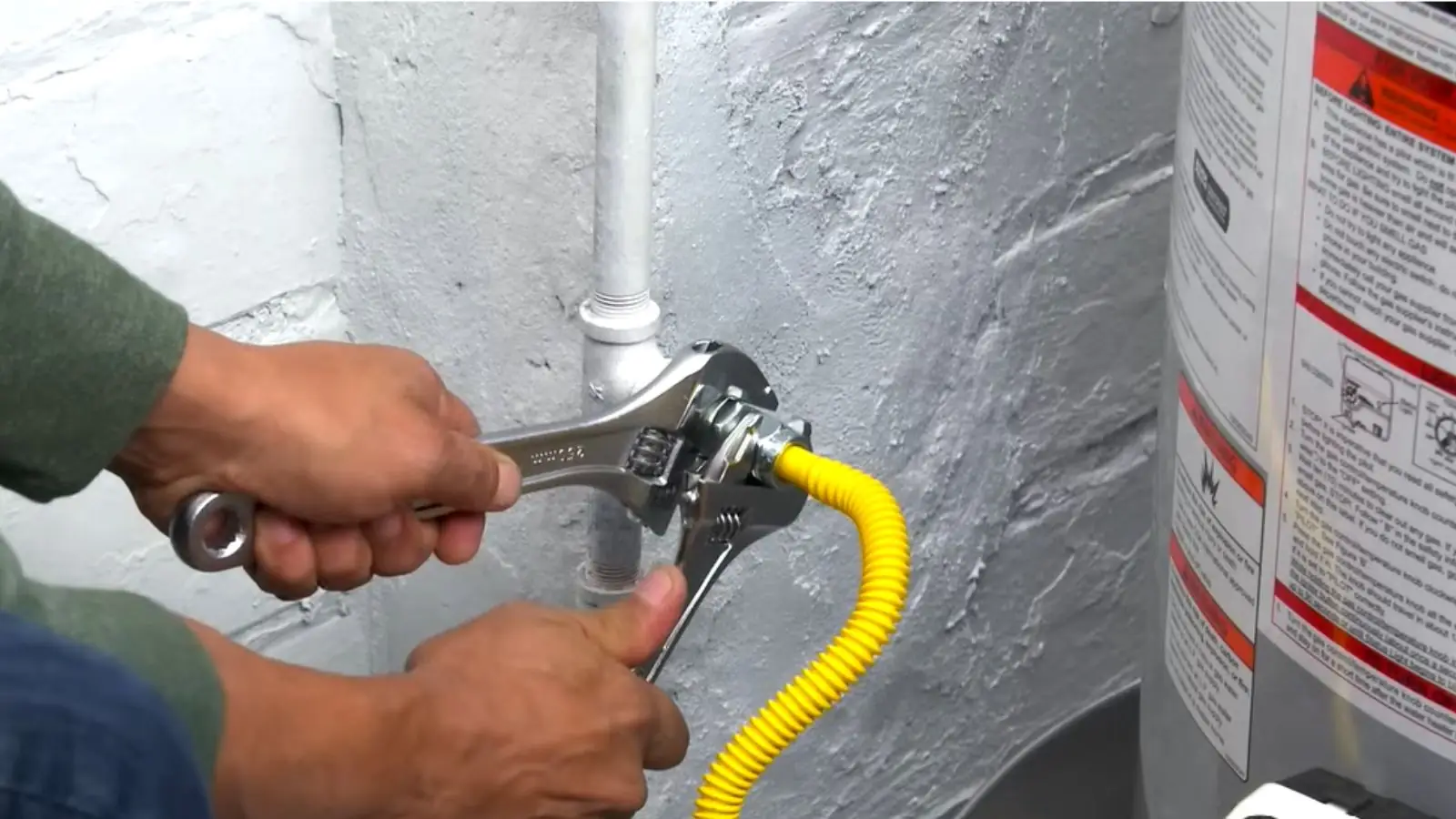
Water heater emergency: what to do first
A water heater that stops heating is an inconvenience. One that leaks is an emergency.
If water is pooling, shut off the cold supply valve above the tank. On a gas unit, turn the gas control to off. On an electric unit, switch off the breaker. If you smell gas, leave the house and call the gas utility or 911 before you call us.
Symptoms and what usually causes them
| Symptom | Common cause | Repair or replace? |
|---|---|---|
| No hot water, gas unit | Pilot out, bad thermocouple or failed gas valve | Usually repair. |
| No hot water, electric unit | Tripped breaker, failed element or thermostat | Usually repair. |
| Lukewarm water | One failed element or heavy sediment | Repair, flush or replace. |
| Popping or rumbling | Sediment baked onto the tank floor | Flush, or replace if old. |
| Water at the base | Loose fitting, drain valve or a leaking tank | Fitting repair or replacement. |
| Rusty hot water | Corroded anode rod or tank lining | New anode rod or replace. |
How we diagnose before we touch a part
We test power or gas first, then check the thermostat, heating elements or burner, and the safety controls. We look at the temperature and pressure relief valve and the venting. Most failures come down to one or two parts.
We also read the tank label for the age. A tank in the 8 to 12 year range, which is the normal life for a tank heater, needs a different conversation than a five-year-old unit with a bad thermostat. Our advice follows the age, the leak location and the price of the part.
Cold water and a leaking tank?
Call and describe what you see.
Repair or replace: a simple test
Repair makes sense when
- The tank is under about 8 years old.
- The leak is from a fitting, valve or pipe.
- The fault is a thermostat, element or thermocouple.
- There is no rust on the tank skin.
Replace when
- The tank itself is leaking.
- The unit is past 10 to 12 years.
- Repairs are stacking up in a year.
- Rust is showing at the base or seams.
A leak from the tank body cannot be patched. If that is your case, our water heater replacement page explains how a swap works.
Norco water and your tank
Norco water is moderately hard to hard in the city reports, with system averages near 122 mg/L in the 2022 data year and near 185 mg/L in the 2021 data year. Minerals settle on the tank floor and on elements. That is why older heaters in hard water areas pop and lose capacity.
California also requires water heaters up to 120 gallons to be braced, anchored or strapped against earthquakes under Health and Safety Code section 19211. We check the strapping when we are at the unit, and we tell you if it is missing.
Safe checks before you call
These steps take five minutes and save time on the call.
- Look for water on the floor and at the drain valve. Do not touch a wet unit with the power on.
- Check the breaker for an electric unit. Reset it once. If it trips again, leave it off.
- On a gas unit, look at the pilot window. Do not relight if you smell gas.
- Read the label for the age. Take a photo of it for us.
- Turn the thermostat to a normal setting. About 120 degrees Fahrenheit is a common household setting.
Code and permits
Water heater work falls under the California Plumbing Code, based on the UPC, which covers relief valves, discharge piping and venting. We check those items on every repair and tell you when something falls short.
What a water heater repair costs
Parts like a thermostat or element are small. A gas valve or a leaking tank changes the math.
Water heater repair questions
Many tank units last roughly 8 to 12 years. Hard water, missed flushing and a worn anode rod shorten that.
Yes. See our tankless water heater page for flushing, descaling and repair.
It can be a loose fitting, which is a quick fix. It can also be a failed relief valve. Shut the water off and call, since the cause decides the repair.