When repiping makes more sense than another repair
Repeated pinhole leaks, rusty water and falling pressure often mean pipe walls are thin all over. Patching one leak shifts pressure to the next weak spot. At some point replacing the pipe costs less than the next three repairs.
If a pipe is leaking now, see burst pipe repair or leak detection. This page covers planned repiping.
Signs your supply pipes are wearing out
Pinhole leaks
More than one in a short time signals pipe wall thinning.
Rusty or brown water
Corroded galvanized steel releases rust.
Low pressure
Mineral buildup narrows older pipes.
Blue-green stains
Copper corrosion at joints.
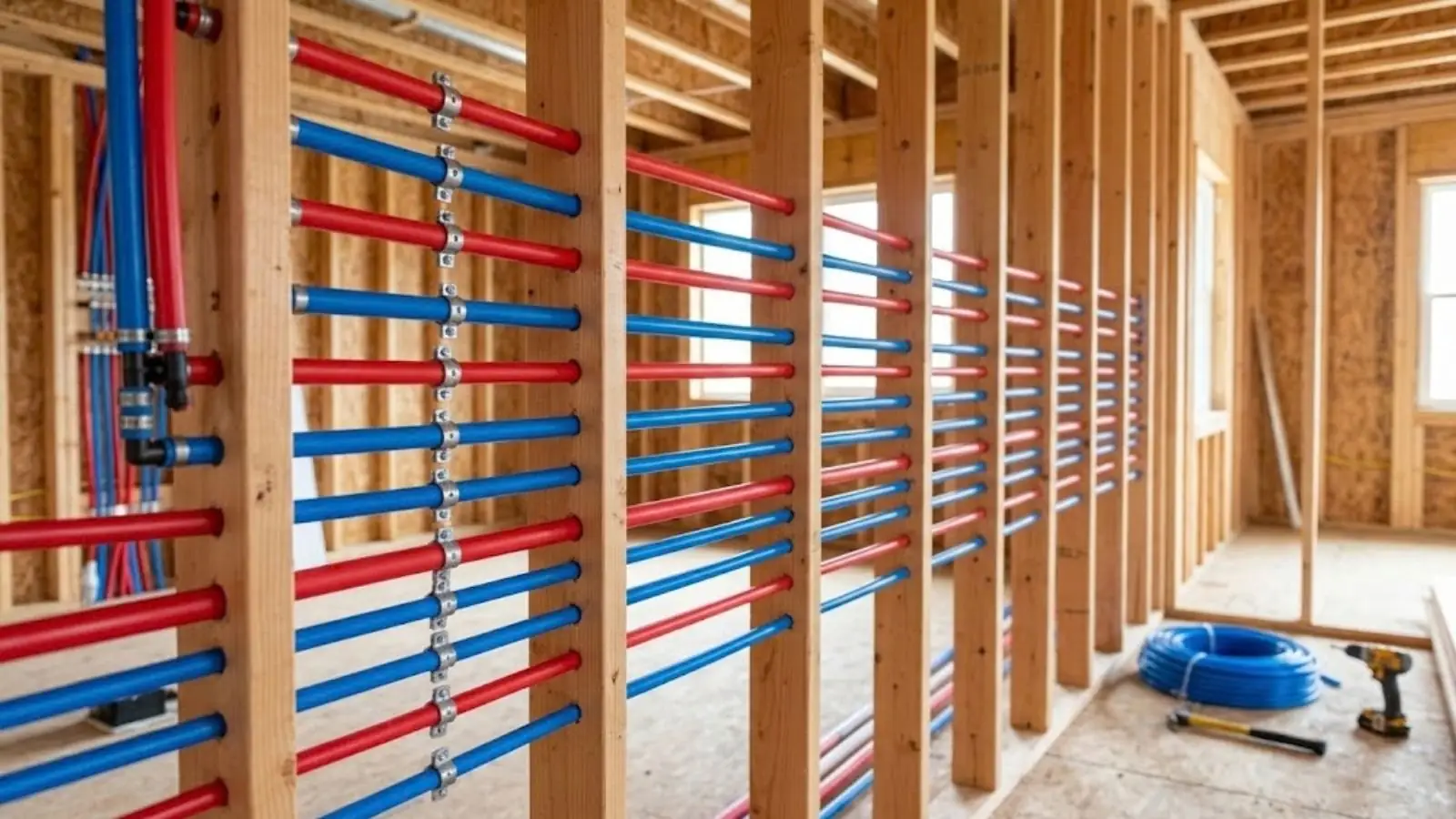
Copper or PEX
Both materials are used under the California Plumbing Code. The better choice depends on your home, your water and your budget.
Copper
- Long track record.
- Rigid, needs more joints.
- Resists heat well.
- Higher material cost.
PEX
- Flexible, fewer fittings.
- Faster to install in many homes.
- Does not corrode like metal.
- Needs proper protection from UV and rodents.
Pipes leaking again?
Call and we will assess them.
How a repipe works
Survey
We map the pipes, fixtures and access points.
Plan
Ask for the scope in writing.
Replace
We run new lines, usually opening small access holes.
Restore
We test, patch openings and reconnect fixtures.
Water chemistry and pipe life in Norco
Norco water comes from purchased treated groundwater and city wells. Reports show hardness averaging between roughly 120 and 185 mg/L and chlorine as the disinfectant. Corona, next door, uses chloramines according to its own report.
Water chemistry affects how pipes age, but home age and material matter more. We cannot say your pipes are bad without looking. A camera, a pressure test and a visual check give a real answer.
Living at home during a repipe
Most repipes keep you in the house, but water is off for part of the day. We plan the work in zones so you have water at night. Expect small access holes in drywall, and plan for dust and noise.
We patch the openings and leave them ready for paint. Move furniture away from walls and clear closets and cabinets under sinks before we start.
Pressure and sizing
New pipe is sized to supply the fixtures in your home. Right-sizing the main and the branch lines gives steady pressure at every tap. We also check pressure at the meter and set a regulator if it runs high.
Good pressure is about 40 to 80 psi in a typical house. We measure yours before and after.
What a good repipe quote includes
A written scope lists every fixture that gets new supply lines, the pipe material, the number of access openings and what we patch. It names the water heater and shutoff connections and says who handles the permit.
If a quote is one line with a single total, ask for the breakdown. You should be able to compare two quotes item by item, not just by the bottom line.
Ask how long water will be off each day, how the crew protects floors and furniture and when the patching happens. A repipe touches the whole house, so a clear daily plan matters as much as the pipe material.
Code and permits
Repiping follows the California Plumbing Code, built on the Uniform Plumbing Code (UPC), and usually needs a permit and inspection. We explain who pulls the permit in the written scope.
What shapes a repipe quote
A repipe touches walls, ceilings and sometimes floors. The scope is the main price driver. We explain the plan before work starts.
Repiping questions
It depends on size and access. Many homes take a few days. We give you a timeline when we quote.
Rules vary by city. Ask the City of Norco building department what applies at your address.
Yes. A partial repipe can fix the worst section and wait on the rest.