
The short answer: a closed system needs a place for the extra water to go
When a water heater heats water, the water expands. In an open system the extra volume pushes back into the city main. In a closed system, with a check valve or pressure regulator at the meter, it has nowhere to go. Pressure rises inside your pipes until something gives, often the relief valve.
An expansion tank is a small tank with a rubber diaphragm and an air cushion. It absorbs the extra water so pressure stays steady. If your relief valve drips or your fixtures hammer, you may need one, or yours may have failed.
Signs your system lacks expansion control
Relief valve drips
Water seeps from the discharge pipe after a heating cycle.
Pressure spikes
A gauge on a hose bib reads high when the heater runs.
Banging pipes
Water hammer when fixtures close.
Short fixture life
Faucets, supply lines and the heater itself wear faster under high pressure.
Open or closed system: how to tell
| Clue | Closed system | Open system |
|---|---|---|
| Check valve at the meter or main | Present | Absent. |
| Pressure regulator on the main | Present | Often absent. |
| Expansion tank on the heater | Needed | Not needed. |
| Relief valve drips during heating | Common | Uncommon. |
A plumber can check your system in a few minutes. A pressure gauge on a hose bib is the simplest first test.
How an expansion tank is installed
Shut down
We shut off the water and power or gas, then drain a little from the tank.
Mount
The tank connects to the cold supply line near the heater with a tee and is supported so its weight does not stress the pipe.
Set the air
We set the tank air charge to match the house water pressure.
Test
We restore water, bleed air, check for leaks and check the relief valve.
Why the air charge matters
The air side of the tank must match your static water pressure. A tank charged too low fills with water at rest and cannot absorb expansion. A tank charged too high holds the diaphragm tight and does the same.
Tanks are shipped with a factory charge that may not match your home. We check with a gauge and adjust before we connect it. Tanks also wear out, so check the air valve yearly and replace a tank that has water in the air side.
Sizing and fit
Expansion tanks are sized by heater capacity and system pressure. A typical residential unit is a few gallons in volume. Larger tanks and higher pressures call for a larger expansion tank.
The tank can hang from the pipe or sit on the floor with a bracket. We choose the mount that fits your closet or garage space and avoids stress on the connection. If you are planning a swap, see our water heater installation page for the full job.
What to check in Norco before you buy a tank
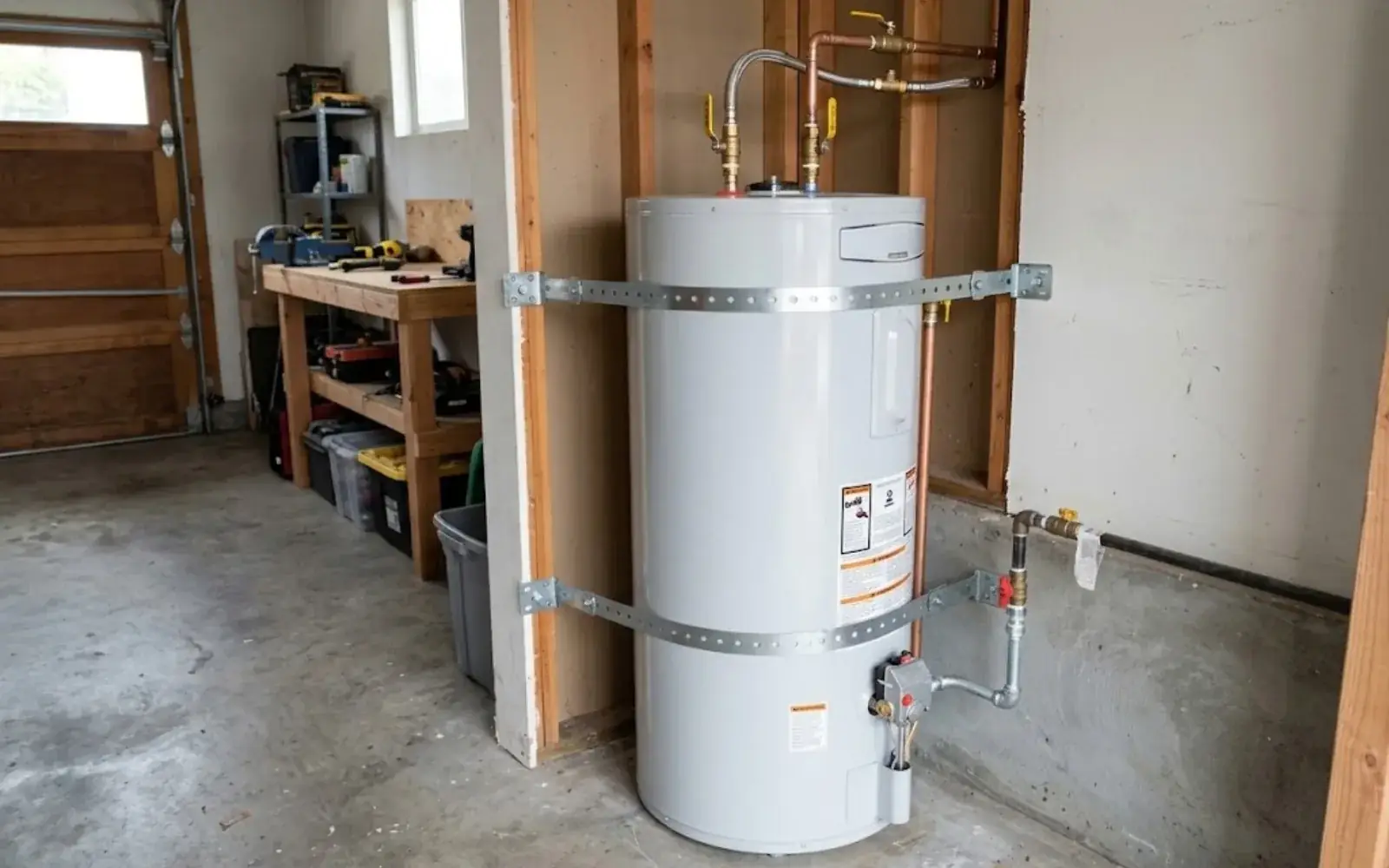
California Health and Safety Code section 19211 requires water heaters of 120 gallons or less to be braced, anchored or strapped. Check the straps whenever you add a tank, since the new weight on the pipe changes the load.
Ask your water utility for the typical pressure in your area, then measure yours with a gauge. The City of Norco water system page says its water is a mix of purchased treated groundwater and city well water, and that supply source can change. Pressure at your tap can vary by location, which is why a gauge at your home matters.
Permits for water heater work vary by city. Ask the City of Norco building department what applies at your address.
Source type: California Health and Safety Code section 19211 and City of Norco water system page.
When to call a plumber
You can check pressure and the air valve yourself. Cutting into a supply line, soldering a tee and setting the charge correctly is plumber work, and a poor job can leak or fail. If your heater is leaking now, see water heater replacement.
How to test an expansion tank
Check the tank
Tap it. The top should sound hollow and the bottom should sound full.
Look at the valve
Press the air valve briefly. Water spitting out means the diaphragm has failed.
Measure pressure
Use a tire gauge on the air valve with the water off and the tank relieved.
Match to the supply
The air charge should match your home water pressure.
Why the air charge matters
A new tank arrives with a factory air charge that may not match your home. Setting it to your supply pressure lets the tank absorb thermal expansion properly. A tank with too little air fills with water and stops doing its job, which brings back the dripping relief valve.
What the tank installation looks like
The tank mounts on the cold supply line near the water heater, supported by a bracket or a stand. The plumber closes the water, drains the line, adds a tee fitting and screws on the tank. After the water returns, the air charge is checked and set.
The work usually takes a short visit. A tank that is too heavy for the pipe alone needs a support, because the weight can strain the fitting over time.
Signs your system may need attention
These clues point toward a pressure or expansion issue.
- The relief valve drips after the heater cycles.
- Pipes bang when a fixture shuts off.
- Faucets or fixtures wear out sooner than they should.
- The water pressure at the meter reads higher than expected.
- An older tank shows rust or moisture near the air valve.
Safety around a hot tank
Never work on the tank while the water heater is hot or the supply is pressurized. Turn off the power or gas, close the cold valve and relieve pressure first. If you are not sure how, a plumber can do the check safely during a short visit.
Code note
Thermal expansion control is addressed in the UPC-based California Plumbing Code for closed systems.
Expansion tank questions
No. A closed system needs one. An open system with no check valve or regulator usually does not. A plumber can confirm yours.
Many last several years. A tank with water in the air valve has failed and needs replacing.
It can be thermal expansion, high pressure or a failing valve. Do not cap the valve. Call a plumber.
Yes, on the cold supply near the heater, with the right support.
Rules vary. Ask the City of Norco building department what applies.