
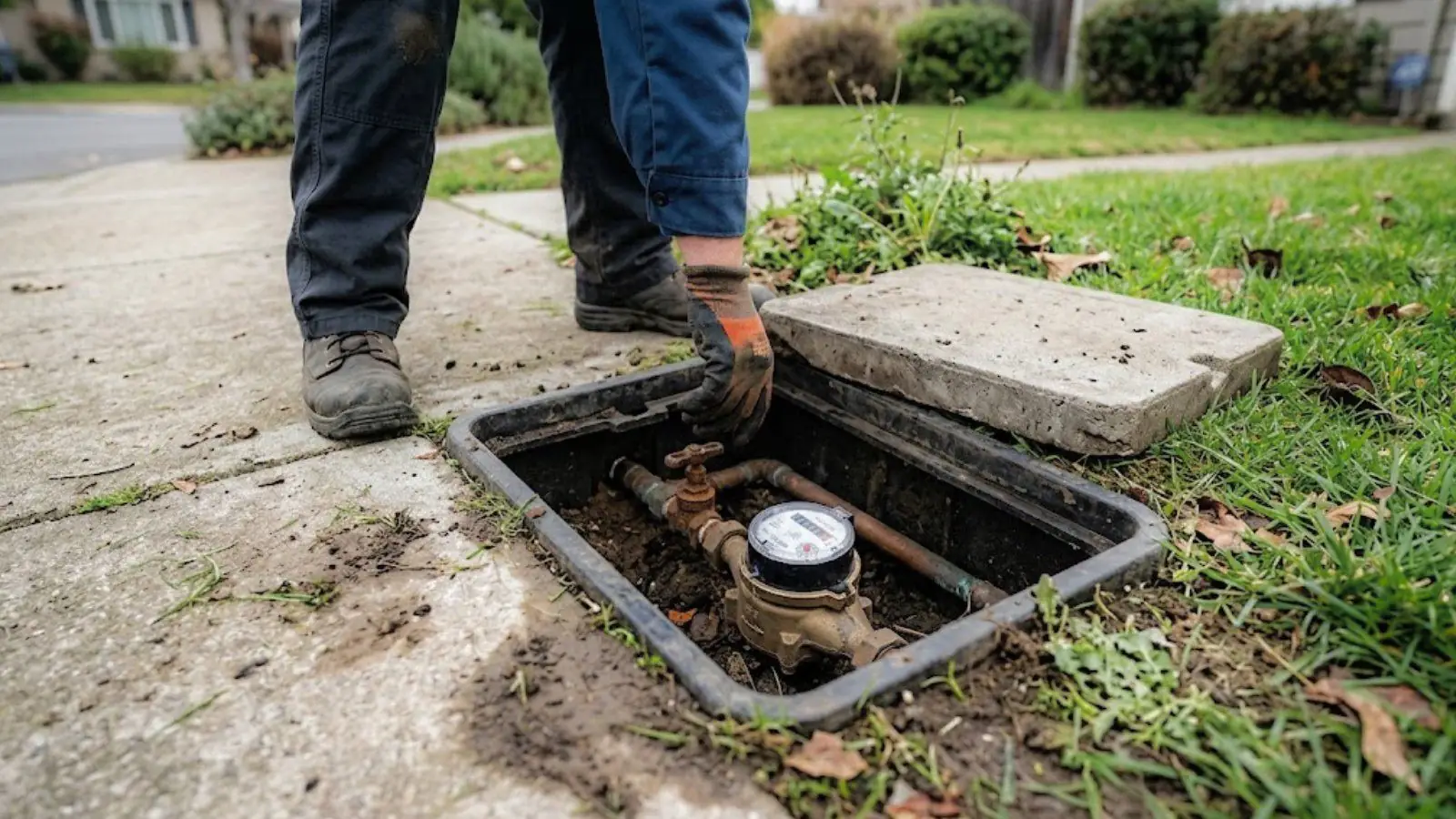
The short answer: confirm the leak with your meter, then locate it
A leak in a buried water line often hides. The signs are a bill that climbs for no reason, a soft or green patch in the yard, the sound of water when everything is off and a meter that keeps moving. The first step is a simple meter test, which takes about thirty minutes.
Once the meter confirms a leak, a plumber narrows it down with listening gear and pressure tests. Digging comes last, and it should happen in the right spot the first time.
The meter test you can do yourself
Shut everything off
Stop all water use inside and outside, including ice makers and irrigation.
Read the meter
Find the leak indicator, usually a small triangle or dial, and note it or take a photo.
Wait
Leave the water off for thirty minutes or more.
Check again
If the dial moved or the numbers rose, water is going somewhere.
Is it the house line or the street side
Your property line runs from the meter to the house. The utility owns the meter and usually the pipe up to it. The homeowner usually owns the line after the meter. Close the main shutoff at the house and watch the meter. If it still moves, the leak is between the meter and the house valve.
If the meter stops when the house valve closes, the leak is inside the home or past the valve. That helps you decide whether the work belongs in the yard or in the walls.
How plumbers find a buried leak
| Method | What it does | Best used for |
|---|---|---|
| Listening device | Picks up the sound of leaking pressurized water | Locating a leak along a line. |
| Pressure test | Isolates a section and watches for pressure loss | Confirming which section leaks. |
| Thermal imaging | Shows temperature differences from hot water leaks | Hot water lines and slab areas. |
| Tracer gas | Pushes a safe gas through the line and senses where it escapes | Hard to hear leaks. |
| Line locator | Traces the path of the pipe | Finding where to dig. |
Signs of a leak in a buried line
These clues are worth checking soon, because a small leak grows over time.
- A wet or sunken patch in the yard when it has not rained.
- Green, lush growth in one strip while the rest is dry.
- Unexplained drops in water pressure.
- The sound of running water when all fixtures are off.
- A bill that rises for no clear reason.
Norco lots, utilities and who to ask
The City of Norco operates its own water system, so questions about the meter and the main belong with the city. Ask the city who owns the line at your address and whether the meter box can be opened by a plumber. The line from the meter to the house is generally your responsibility.
Properties with a long run from the meter to the house or to an outbuilding have more to test. A longer run means more pipe to test and more places for a leak. Ask the plumber to test each branch separately.
Ask the City of Norco for your average usage history. A step up in usage on the bill tells you roughly when the leak started.
Source type: City of Norco water system pages and customer billing records.
Repair options for a buried line
A short leak can be fixed with a spot repair. The plumber opens the ground over the leak, cuts out the damaged piece and joins new pipe with proper fittings. Trenchless methods can replace a longer run with less yard damage, but they need the right conditions.
If the pipe is old, brittle or leaking in several places, replacing the full run is often better than patching it again. Ask for a price on both options, and ask what the yard will look like when the work is done.
Call before you dig
Before any digging, call 811 so utility lines get marked. In California, this is required for most digging jobs. A plumber should handle that step, but if you plan to dig your own yard, make the call yourself at least two working days ahead.
What a leak costs you if you wait
Water under the ground softens soil and can undermine slabs, patios and driveways. It wastes water you pay for, and it can raise your bill month after month. A leak that you fix early costs one repair. A leak that you ignore can turn into a damaged driveway and a bigger repair.
If you see water pooling or the ground sinking, shut the water at the house valve and call. Our leak detection team finds leaks without guesswork. We serve Norco, Corona and Eastvale.
What the visit looks like
On arrival, the plumber asks about your bill, the meter reading and what you have noticed. They check the meter, close valves to split the line into sections and listen along the path. The plumber then marks the spot on the ground so you can see where the opening will be.
Before any work, you get the finding, the repair options and the price. If you only want the leak located, you can stop there and use the information to get other quotes. Our water line repair team handles the fix when you are ready.
Common causes of buried line leaks
| Cause | How it happens | What helps |
|---|---|---|
| Corrosion | Metal pipe thins from the outside in | Replace the failing run. |
| Ground movement | Soil shifts and strains joints | Flexible connections and proper bedding. |
| Roots and rocks | Pressure from growth or sharp stones | Careful backfill and routing. |
| High pressure | Constant stress on old fittings | A pressure check and a regulator. |
| Poor joints | Fittings fail at weak points | Quality fittings and clean cuts. |
Pressure and your supply line
High household pressure strains buried joints and fixtures. A simple gauge on a hose bib shows your static pressure. If the reading is high, a pressure regulator near the house shutoff protects the line and the fixtures. Ask a plumber to check it during the visit.
Code note
Replacement service pipe must meet the California Plumbing Code, based on the Uniform Plumbing Code (UPC).
Underground leak questions
Run the meter test. If the meter moves while all water is off, a leak exists somewhere after the meter.
The homeowner usually owns the line after the meter. Ask the City of Norco to confirm for your address.
Yes. Listening gear, pressure tests and line tracing locate most leaks before any digging starts.
It depends on the size of the leak and the soil. Small leaks can run for months before surfacing.
Yes. If water is surfacing fast, shut the house valve and call.