The short answer: most bowl problems have a simple cause
Most toilet bowl problems come from three places: a worn seal at the base, a clogged rim or trap, or a cracked bowl. A seal leak and a weak flush are often repairable. A cracked bowl is not, and the toilet needs replacing.
If water is on the floor, close the supply valve at the wall first. If the bowl is cracked, stop using the toilet. A hairline crack can open under weight and flood the room.
Match the symptom to the cause
| What you see | Likely cause | Can you fix it? |
|---|---|---|
| Water around the base | Failed wax ring or loose closet bolts | Possible, but it needs the toilet lifted. |
| Weak or slow flush | Clogged rim jets or a partial clog | Often yes. |
| Bowl will not hold water | Siphon or trap problem, or a crack | Call a plumber. |
| Rocking toilet | Loose bolts or a damaged flange | Call if the flange is cracked. |
| Visible crack in the bowl | Fractured porcelain | Replace the toilet. |
| Stained ring or mineral buildup | Hard water scale | Yes, with cleaning. |
How to check a leak at the base
Dry it
Wipe the floor and the base so you can see fresh water.
Tighten
Snug the closet bolts a little at a time. Do not overtighten porcelain.
Watch
Flush and look for water at the base, not the supply line.
Decide
If it still weeps, the wax ring has failed. The toilet has to come up.
Clogs and weak flush
A strong flush needs clear rim jets and an open trap. Scale blocks the small holes under the rim, which makes the bowl fill slowly and flush weakly. You can clear them with a small mirror and a wire, then flush with a bucket of water to confirm.
If the toilet clogs often, the cause may be a partial blockage further down. When other drains gurgle, the clog is in a shared line. Drain cleaning fixes that, not a new toilet.
Safe home repairs and the limits
Here is a practical line between a weekend repair and a call to a plumber.
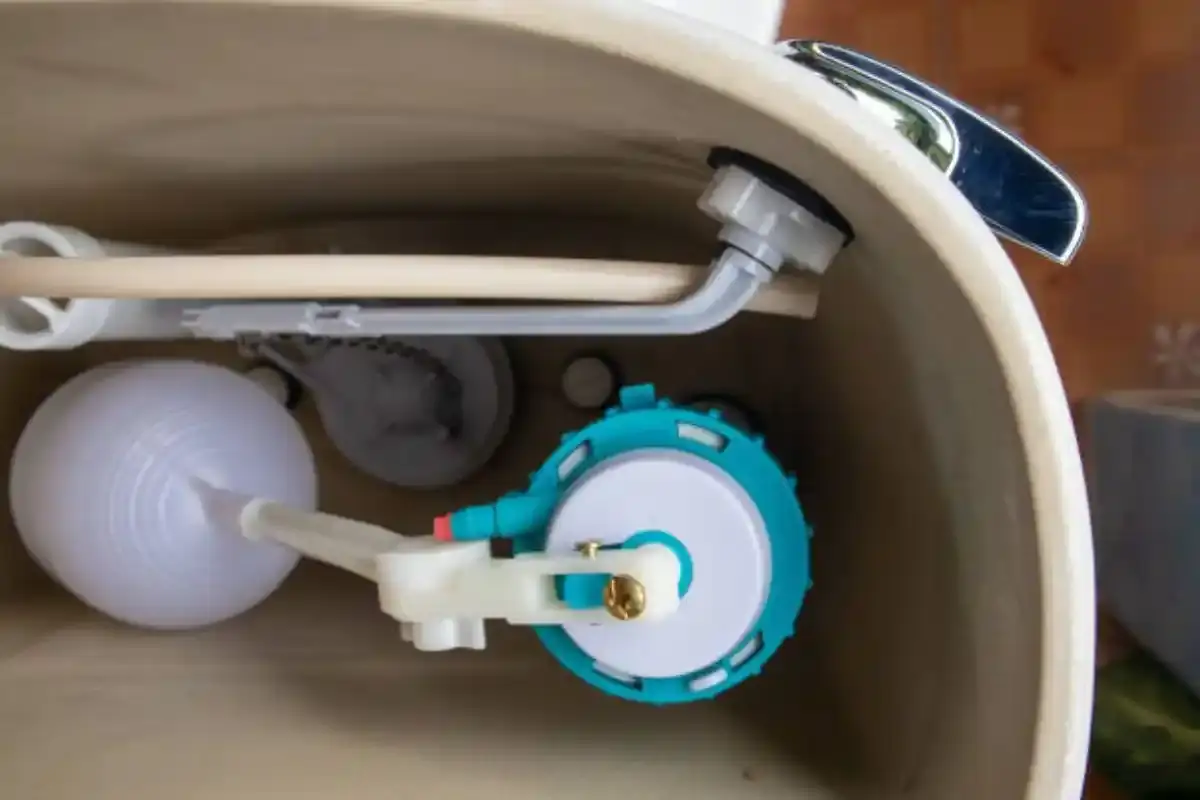
- Replace a worn flapper or fill valve. These parts are inexpensive and common.
- Plunge with a flange plunger, which seals better than a flat cup.
- Clear rim jets with a wire and a mirror.
- Do not use chemical drain cleaners in a toilet. They can damage the bowl and hurt a plumber later.
- Stop and call if you see a crack, a rocking base or water coming up elsewhere.
What Norco water does to a toilet bowl
The City of Norco reported average hardness near 122 mg/L in its 2022 data and near 185 mg/L in the 2021 data. That is moderately hard to hard water, and scale builds on rim jets, fill valves and the bowl line.
The same city report lists chlorine as the disinfectant, with a 2022 average of 1.6 mg/L. Chlorine slowly softens rubber parts. A flapper that is a few years old in Norco may already be worn.
Test your tap hardness and ask the city for its latest annual report. Your street can differ from the system average.
Source type: City of Norco annual water quality reports.
When to call a plumber
Call when the toilet is cracked, the flange is damaged, water is under the floor or the toilet clogs repeatedly. Floor damage hides under vinyl and tile, and a slow leak can rot the subfloor.
Read about toilet repair below. If the toilet is overflowing at 2 a.m., call us. We also serve Corona and Eastvale.
Choosing a replacement toilet
Measure the rough-in, which is the distance from the wall to the center of the drain flange. Twelve inches is common, but older homes can differ. Buy a toilet that matches, and check the bowl shape against your space, because elongated bowls need more room.
Look at flush design and water use on the label. A modern high-efficiency toilet uses less water per flush than older models and can lower your bill over the years.
Replacing the wax ring
Shut off and drain
Close the supply valve, flush and sponge out the remaining water.
Lift the toilet
Remove the nuts and lift the bowl straight up, then set it on towels.
Clean the flange
Scrape off the old wax and check the flange for cracks.
Reseat
Set a new ring, lower the bowl straight down, snug the bolts evenly and test for leaks.
Floor damage to look for
When the toilet is up, check the floor around the flange. Soft or dark wood, a musty smell or lifted vinyl means water has been getting in for a while. A damaged floor needs repair before the toilet goes back, and a plumber can show you what is under it.
Preventing repeat clogs
Flush only waste and toilet paper. Wipes marked flushable do not break down like paper and are a common cause of clogs in drain lines. Thick paper in large amounts can also overwhelm a bowl, so flush twice if needed.
Keep a flange plunger near the toilet and teach everyone in the home how to use it. A fast response to a minor clog keeps it from becoming a spill.
Parts that often get replaced
| Part | Sign of wear | Typical fix |
|---|---|---|
| Flapper | Tank refills on its own | Replace the flapper. |
| Fill valve | Hissing or slow refill | Replace the valve. |
| Wax ring | Water at the base | Reset the toilet with a new ring. |
| Supply line | Drips at the wall valve | Replace the line. |
| Handle or chain | Weak or stuck flush | Adjust or replace. |
Cleaning scale without damage
Use a toilet bowl cleaner made for mineral scale or white vinegar left to soak, then scrub with a nylon brush. Avoid mixing cleaning products, and never mix bleach with acids or ammonia. Scale left alone can narrow the rim jets over time.
Code note
Replacement toilets must meet the UPC-based California Plumbing Code and state water use limits.
Toilet bowl repair questions
Not reliably. Epoxy does not hold under repeated use and water pressure. Replace the toilet.
The wax ring or the seal may have failed, or the bolts may be loose. A plumber can reset the toilet with a new seal.
The toilet rocks, the base leaks even after a new seal, or the flange sits below the floor.
It can. Norco city reports show hard water and chlorine, which wear fill valves and rubber flappers faster.