
The short answer: infrared shows temperature, not water
An infrared camera does not see through walls and does not see water. It shows surface temperature. A wet area often sits at a different temperature than dry material, so the camera can point to where moisture may be hiding.
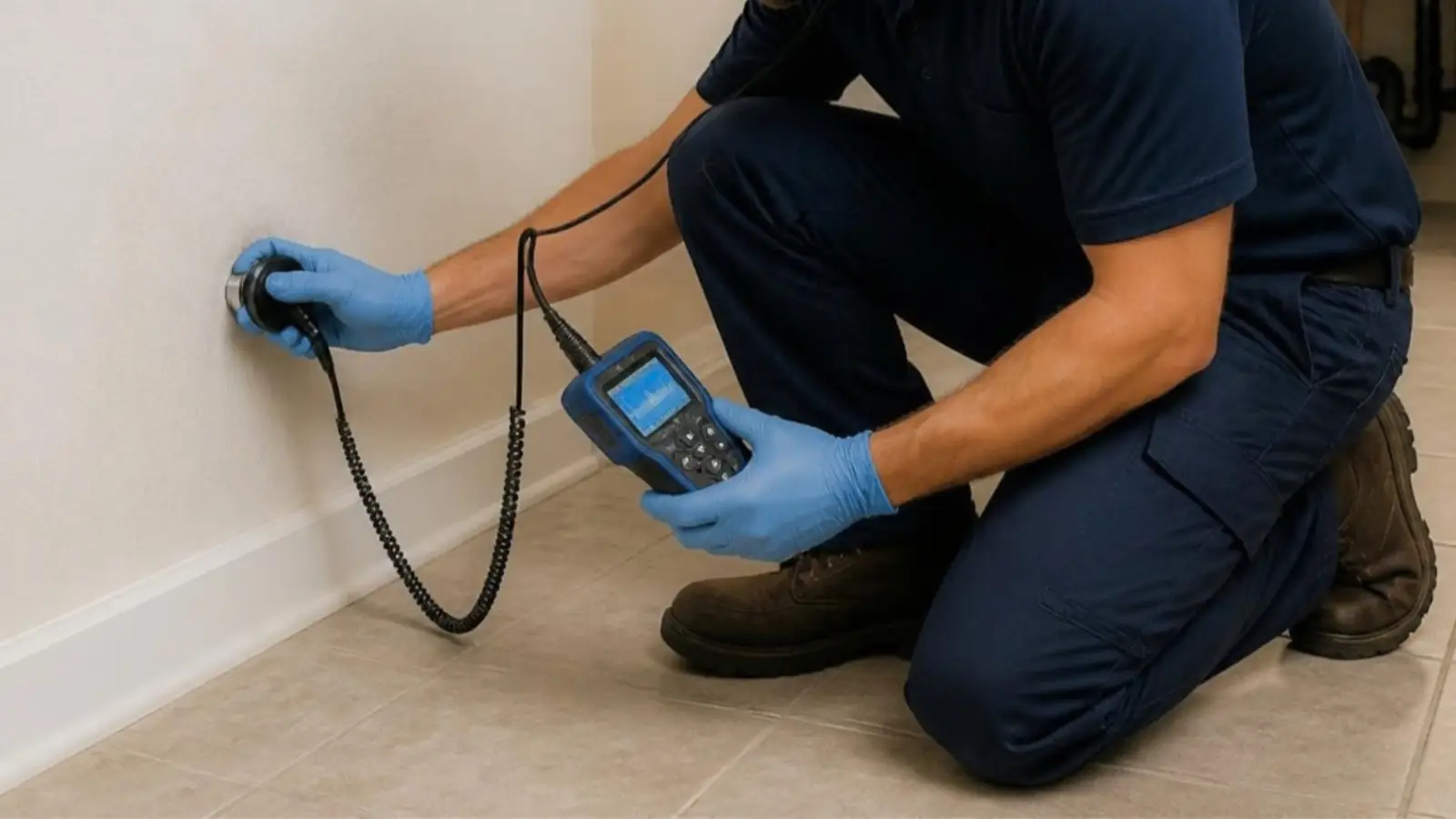
That makes it a useful screening tool, not a final answer. A good technician uses the image to decide where to check next, then confirms with a moisture meter, a listening device or a pressure test.
What each tool is good at
| Tool | What it shows | Limit |
|---|---|---|
| Infrared camera | Surface temperature patterns | Does not confirm water by itself. |
| Moisture meter | Moisture in a material at a point | Only reads where you place it. |
| Acoustic listener | Sound of leaking pressurized pipe | Weak in noisy areas. |
| Pressure test | Whether a line holds pressure | Does not give an exact location. |
| Visual inspection | Stains, swelling, mold | Only shows damage that has surfaced. |
When thermal imaging helps the most
It works well on hot water lines, where a leak warms the surrounding slab or wall. It also helps with radiant heating, water behind ceilings and wet insulation, where the temperature difference is clear. A scan can cover a room in minutes.
It works less well when the leak is cold water in a building with an even temperature. In that case, listening gear and meter tests often do more. Good technicians choose the tool for the job, not the other way around.
What a scan visit looks like
Talk first
The technician asks what you saw, such as stains, warm floors or a high bill.
Scan
The camera sweeps floors, walls and ceilings and notes unusual patterns.
Confirm
A moisture meter or listening device checks the spots the image flagged.
Report
You get the finding, a photo of the area and the next step.
Clues that point to a hidden leak
Any of these is a reason to test before damage spreads.
- A warm spot on a floor when no heating is on.
- A bill that rises without a change in use.
- The sound of running water when everything is off.
- Peeling paint, stained ceilings or swollen baseboards.
- A musty smell in a room with no visible source.
Norco homes, slabs and the bill
Homes can sit on concrete slabs with supply lines below or within the slab, or on raised foundations with crawl spaces. The foundation type changes which methods work best, so tell your plumber which you have.
The City of Norco runs its own water system, and your billing history shows usage over time. A step change in usage on the bill helps date the leak. Ask the city for your usage history when you call.
Check your own meter first. A moving meter with all water off confirms a leak somewhere after the meter.
Source type: City of Norco water system and billing information.
What infrared cannot do
It cannot see inside a wall without a temperature difference reaching the surface. It cannot tell you whether a stain is old and dry or new and active. It cannot identify the pipe that is leaking, only a pattern near it.
Reflections, sun on a wall and heat from appliances can fool a camera. A trained operator reads the image with that in mind. A picture alone should not decide whether to cut into a wall.
Why you want a report, not just a scan
A written summary with photos shows what was found and where. It helps with a repair quote and with an insurance conversation. It also lets a second contractor see exactly what the first one saw, which avoids paying for the same investigation twice.
After the leak is found
Once the plumber confirms the location, the repair depends on the pipe and the access. A leak behind a wall may need a small opening that is patched afterward. A leak under a slab may be fixed by a spot repair or by rerouting the line through the walls or attic.
Our leak detection team finds the leak first and explains the options. When the fix is under a slab, see our slab leak repair page. We serve Norco, Eastvale and Corona.
Questions to ask before you book a scan
Ask whether the visit includes confirmation with a second method. Ask whether you receive photos and a written finding. Ask what the technician does if the scan finds nothing, and whether a pressure test is part of the price.
A scan that stops at a thermal image may leave you with a guess. A scan that ends in a located leak and a plan is the one worth paying for.
What a thermal image might show and what it means
| Image pattern | Possible meaning | Next check |
|---|---|---|
| A warm strip on a floor | A hot water line leaking below | Moisture meter and listening. |
| A cool patch on a wall | Moisture evaporating from wet material | Moisture meter. |
| A cool spot on a ceiling | Wet insulation or a dripping line above | Check the attic or the room above. |
| A uniform surface | No clear pattern | Use other methods. |
| A sharp hot or cold edge near a window | Sun or air leaks, not a pipe | Rule out a false reading. |
Preparing your home for a scan
Turn off fans and heaters in the room a short time before the visit if the technician asks you to. Move furniture away from walls and floors where you suspect a problem. Make a list of what you noticed and when.
Know where your main shutoff is. If the technician finds an active leak, you may need to close it at once. Having the valve clear and working makes the visit smoother.
Insurance and documentation
If a leak damaged your home, a located source and a written finding help when you talk to your insurer. Photos with dates, the thermal image and the moisture readings together tell a clear story. Keep every receipt and report in one folder.
Code note
Once a leak is located, repair materials must meet the California Plumbing Code, based on the UPC.
Infrared leak detection questions
It can show a temperature pattern at the wall surface. A moisture meter or other tool confirms it.
No. Cold water leaks in an evenly heated space can be hard to see. Other methods fill the gap.
No. A thermal scan is non-invasive and requires no openings.
A meter test, a moisture reading over time and a pressure test show whether water is still moving.